
The Pinnacle Revolution
How Pinnacle Established the Modern Column Array Standard
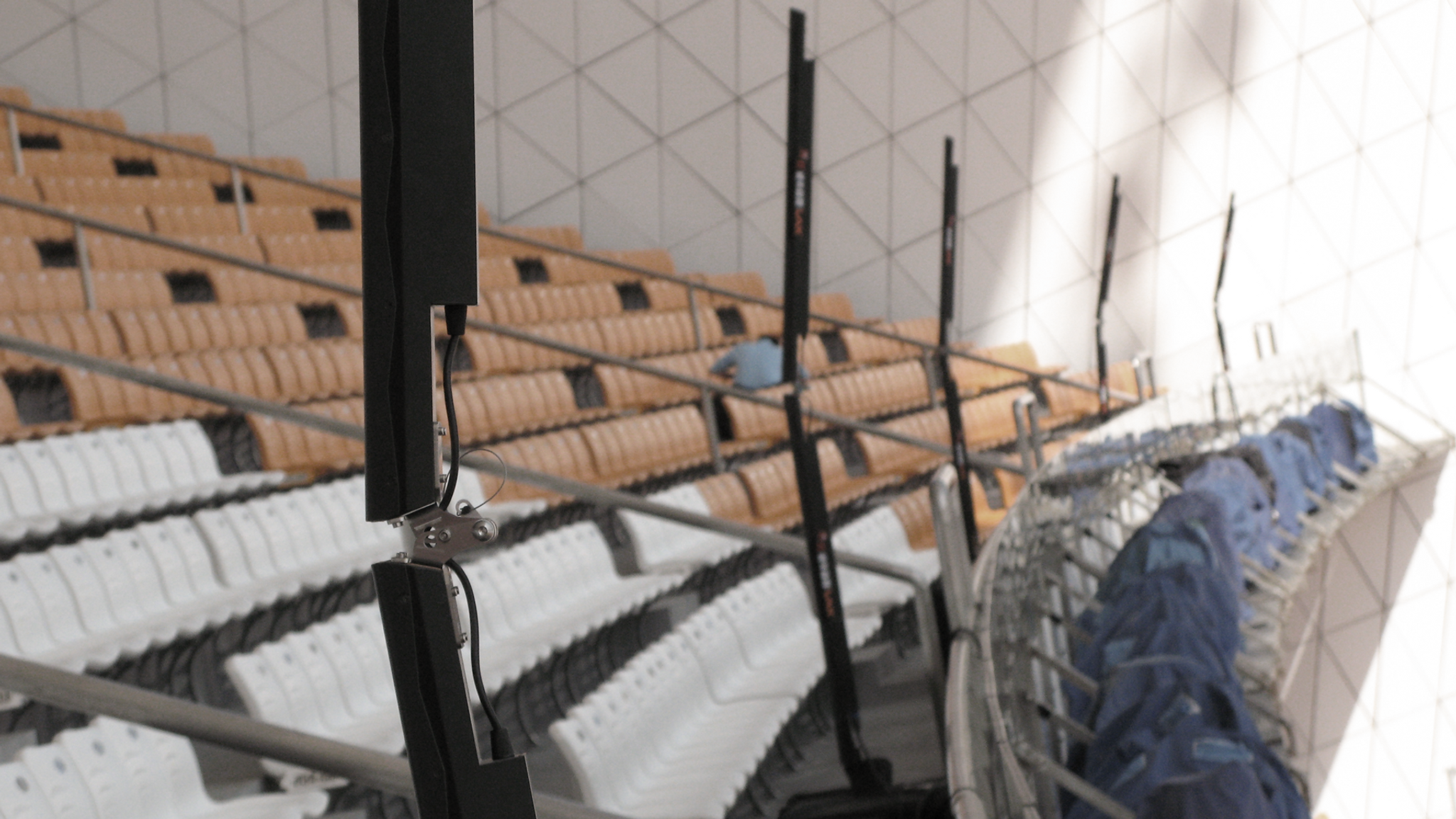
From Bulky Boxes to Architectural Sound: The Birth of a New Category
In the mid-2000s, professional audio looked very different. Large, heavy loudspeakers ruled the industry. Transport was difficult. Permanent installations were visually intrusive. And venues were asking for something the market couldn’t yet deliver: sound systems that were powerful, portable, and architecturally discreet.
K-array saw that gap and filled it.
The launch of the Pinnacle compact column array didn’t just introduce a new product. It introduced a new category. A system small enough to travel in a car, sleek enough to disappear into architecture, and powerful enough to carry theaters, houses of worship, and broadcast studios.
At just 50 mm wide, early listeners couldn’t believe what they were hearing. Pinnacle didn’t simply fit into spaces — it redefined what sound systems were allowed to look like.
Engineering Principles That Still Drive Pinnacle Today
That first Pinnacle system established design principles that continue to shape K-array products today.
Custom-engineered drivers deliver unusually high power density. Aluminum enclosures function as heat sinks, keeping components cool under sustained output. The result is louder, cleaner performance from smaller form factors — without sacrificing reliability.
Sustainability was built into the platform from the beginning. Efficient thermal management extends component life and reduces material waste. Smart engineering, not excess mass, became the solution.
Modular construction also allowed systems to scale. Columns in multiple lengths could be combined into arrays of any size, adapting to venue requirements with predictable performance. Over successive generations, stability, modularity, and angle adjustment were refined while output capability continued to climb.
Most recently, Thunder-KS introduced OsKar intelligent processing, a next-generation control and DSP platform that allows full system management across modern control environments while future-proofing the ecosystem for years ahead.
Why Column Arrays Became the Smart Choice
Column array loudspeakers deliver a unique combination of advantages:
Long-throw, uniform coverage
Controlled vertical dispersion
Thin, unobtrusive profiles
Fast deployment
Consistent intelligibility in reverberant spaces
K-array’s Pure Array Technology (PAT) further advanced this concept by using continuous rows of closely spaced drivers to achieve coherent wave propagation and even coverage across long distances.
From the earliest 2-meter arrays to today’s modular Pinnacle systems, the goal remains the same: make sound coverage predictable, powerful, and visually discreet.
Customization That Matches Any Architecture
Pinnacle systems aren’t just small; they’re customizable.
RAL color matching.
Metallic finishes.
Brushed or polished steel.
Gold and specialty galvanic treatments.
Whether a project demands invisibility or a statement piece, Pinnacle adapts. That flexibility allows designers to place speakers where audio works best, not where they can be hidden.
Proven on the World’s Most Demanding Stages
Pinnacle isn’t an experiment. It’s a proven platform trusted in some of the most acoustically and architecturally demanding venues in the world.
Royal Opera House, London
La Scala, Milan
Boston Ballet
Teatro Bellini, Naples
Havana Theatre
It has also powered national concert tours across Italy using only column arrays, demonstrating that compact architecture and large-scale performance can coexist.
The Revolution That Became the Standard
Today, column arrays are common across the industry. But Pinnacle was among the first to prove that small, elegant loudspeakers could outperform much larger traditional systems.
That revolution continues, not by standing still, but by refining every generation with smarter processing, better materials, and deeper integration.
Compact. Powerful. Architectural. Intelligent.
That’s the Pinnacle legacy and the reason it still leads.
