
How Audio Professionals Can Embrace Integrated Light + Sound with KSCAPE
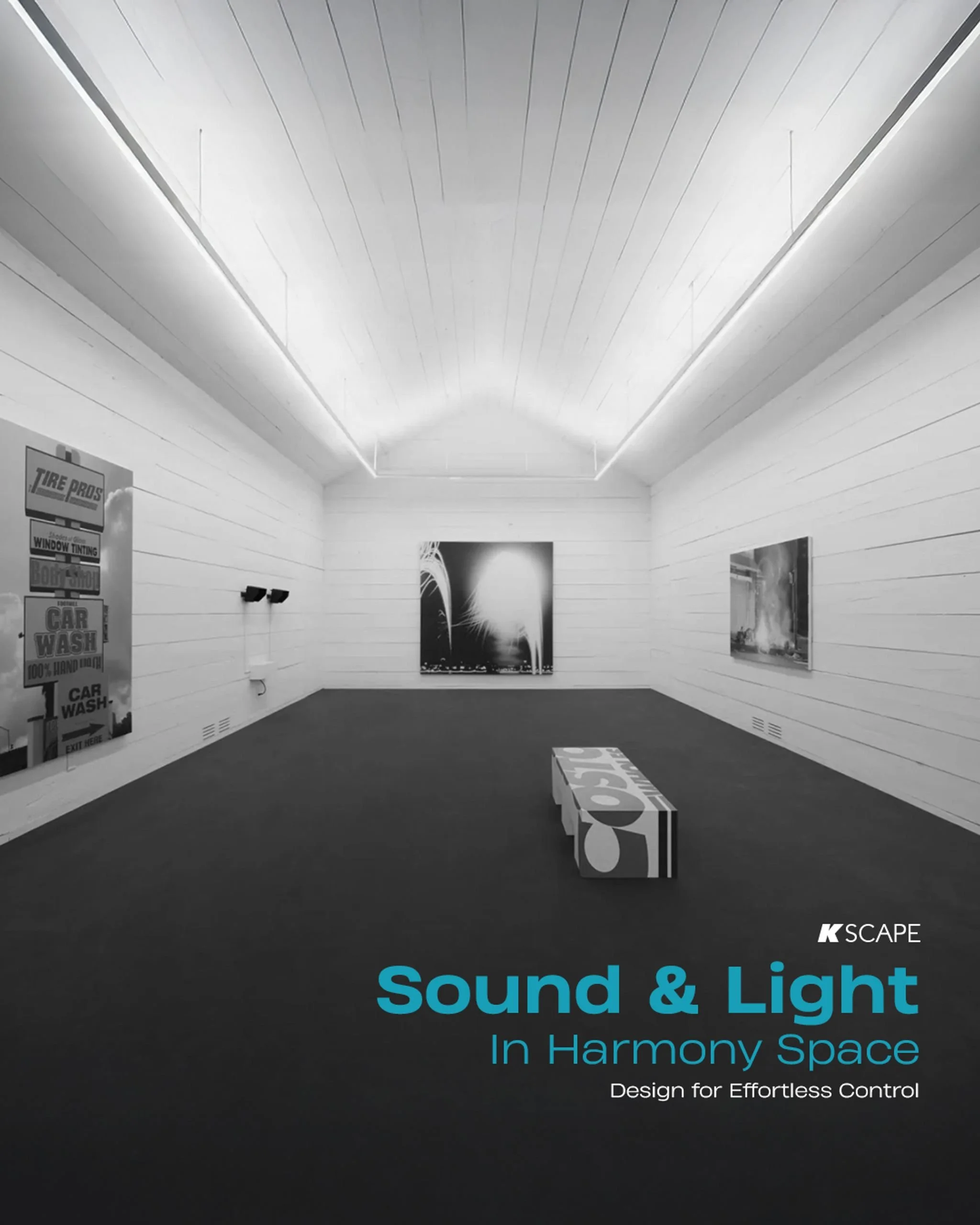
Lighting Isn’t the Competition. It’s the New Audio Advantage.
For many audio designers, lighting has long been the unexpected rival in the ceiling. You’ve designed the perfect speaker layout… only to discover the lighting plan arrived first and claimed your real estate. We’ve all been there.
But the industry is shifting. Clients now expect technology to blend seamlessly, not just function well, but disappear beautifully into the architecture. That’s exactly why KSCAPE exists. And it’s why a growing share of KSCAPE systems are specified through AV professionals, not just lighting designers. The demand for unified experiences is rising and audio specialists are in a prime position to lead it.
Acoustics and Aesthetics: No Longer a Trade-Off
A common concern with integrated lighting-audio systems is acoustic compromise. Fair worry — bad integration usually means bad sound.
RAIL changes the equation. Instead of fighting for ceiling space, the loudspeaker becomes part of the lighting fixture itself. No awkward speaker placement. No “almost-right” coverage. No visual clutter.
The result? Predictable acoustics, clean architecture, and a design process where audio is considered from day one — not patched in later. That early collaboration benefits everyone, especially the client, who gets a fully synchronized sound-and-light experience instead of two separate systems stitched together at the last minute.
Performance stays premium. Design stays elegant. Nobody loses.
Power and Wiring: Fewer Headaches, Cleaner Installs
Another concern we often hear: “Won’t this make power and control wiring more complicated?”
Actually, it simplifies it.
With RAIL, lighting and audio share an integrated power infrastructure. KSCAPE also supports KNX-based solutions and works smoothly with control protocols like DALI or Bluetooth mesh. Modern Bluetooth mesh, in particular, has matured into a stable and scalable option — far removed from the finicky versions of the past.
The advantage for integrators? Easier coordination with IT and building management systems. In large corporate environments, that means fewer surprises during commissioning and stronger confidence from facility teams.
A great example: at JLL’s Capita Springs office in Singapore, KSCAPE integrated into a Crestron environment to manage daylight-responsive lighting while simultaneously delivering Moodsonics biophilic soundscapes for sound masking. One ecosystem. Multiple outcomes.
Unified Control: Light and Sound from One Interface
Audio pros also worry about control compatibility. Will they need yet another interface? Will it play nicely with existing systems?
KSCAPE’s K-Control platform provides unified management of lighting and audio from a single dashboard. Think of it as a purpose-built environment for sensory control that is intuitive, flexible, and scalable.
Prefer Crestron or Lutron? No problem. KSCAPE integrates with them too. You choose the control environment that best fits the project.
From boardrooms to hospitality spaces to wellness environments, operators can shape sound and light together, not in separate silos. That’s where real experiential design happens.
A New Tool in the Audio Designer’s Toolkit
KSCAPE isn’t here to replace traditional audio design principles. It’s here to expand what’s possible. When light and sound are designed as one system from the start, projects run smoother, installations look cleaner, and end-users experience spaces that simply feel right without noticing why.
For audio professionals, that’s not a threat. That’s an advantage.
